The Nearest Beach to Liverpool Isn’t in Liverpool: Crosby Beach Guide
Some of the links in this post are affiliate links which means I earn a small commission if you purchase or book through my link, at no extra cost to you.
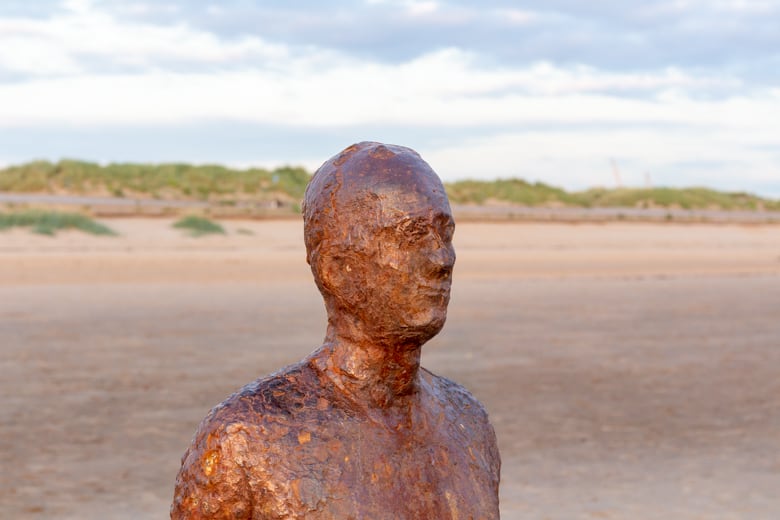
When you search Liverpool on the map, you might notice it looks like it’s situated by the sea. You’d expect a beach in the city centre (or at least nearby), wouldn’t you?
Well, I did — and I was pretty disappointed when I moved here and realised the nearest beach to Liverpool is a few kilometres north, in Crosby.
Liverpool is coastal, but not “city-centre beach” coastal. The nearest beach to Liverpool is the Crosby Beach.
Crosby Beach — the nearest beach to Liverpool
Crosby is one of several seaside towns near Liverpool, situated just beyond the Liverpool Docks. It’s home to the closest beach to Liverpool, making it a great option for a short trip when you want some sea air without a big journey.
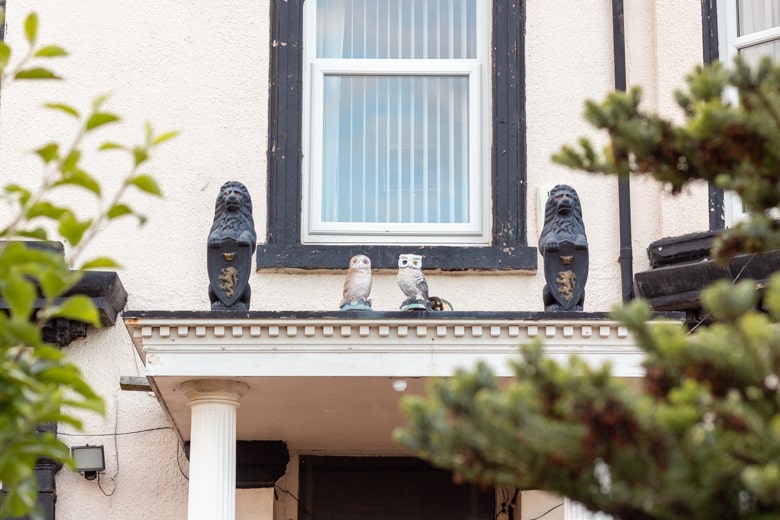
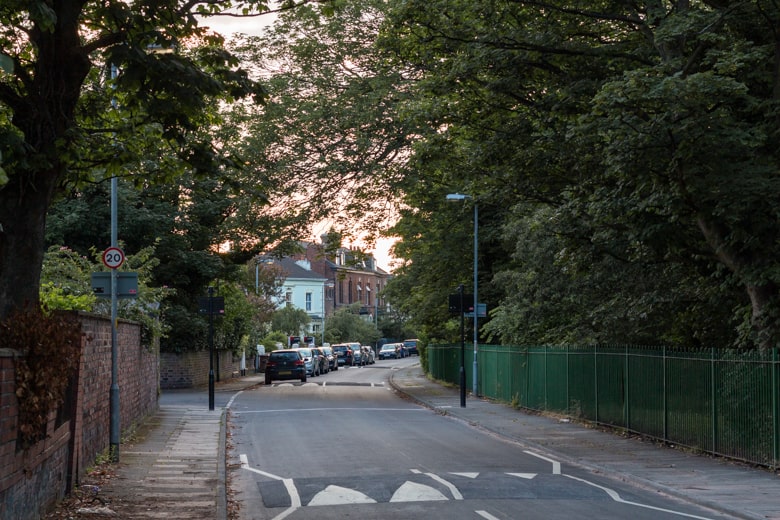
A walk around the town can be calm and relaxing. The streets of Crosby are picturesque and often unappreciated.
From the seashore, you can see the Wirral Peninsula and the hills of North Wales in the distance.
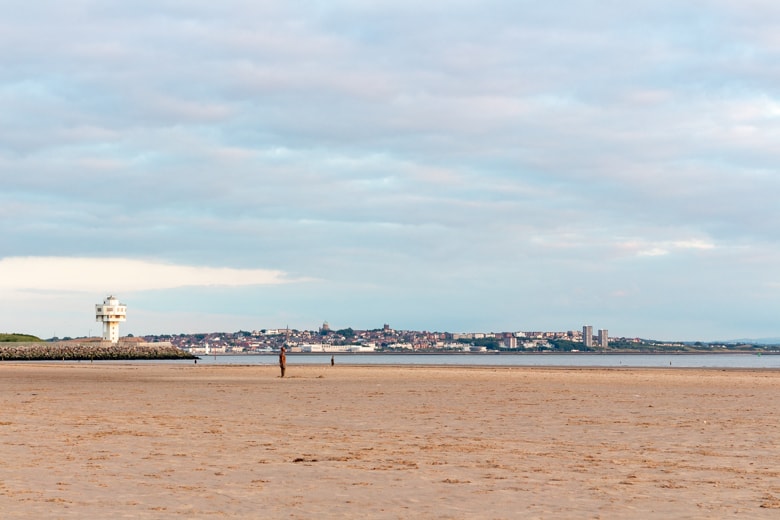
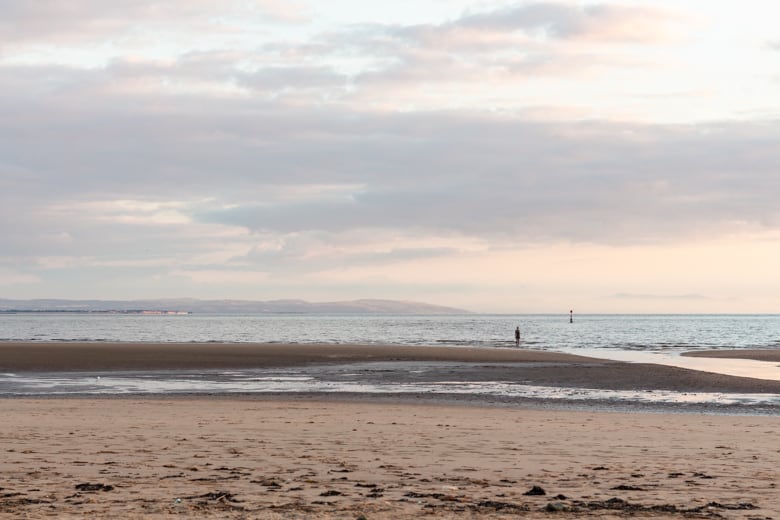
Unfortunately, you can’t bathe at Crosby Beach, and you should stay close to the promenade because of areas of soft sand and mud, plus fast-changing tides. You can, however, go for a walk along the coastline and take in the scenery instead.
Crosby Beach is popular with walkers and is dog-friendly all year round.
Safety note: This beach isn’t one to wander far out on without checking tide times. The mud can be dangerous.
“Another Place” by Antony Gormley — Crosby’s hidden gem
In 2005, 100 iron men appeared on Crosby Beach. They turned out to be part of an art installation called Another Place, which had previously been displayed in Cuxhaven (Germany), Stavanger (Norway), and De Panne (Belgium).
The sculptures were supposed to stay in Crosby until November 2007, but the local council later granted permission for them to remain permanently. Despite the controversy at the time, the iron men became a popular attraction that boosted the local economy.
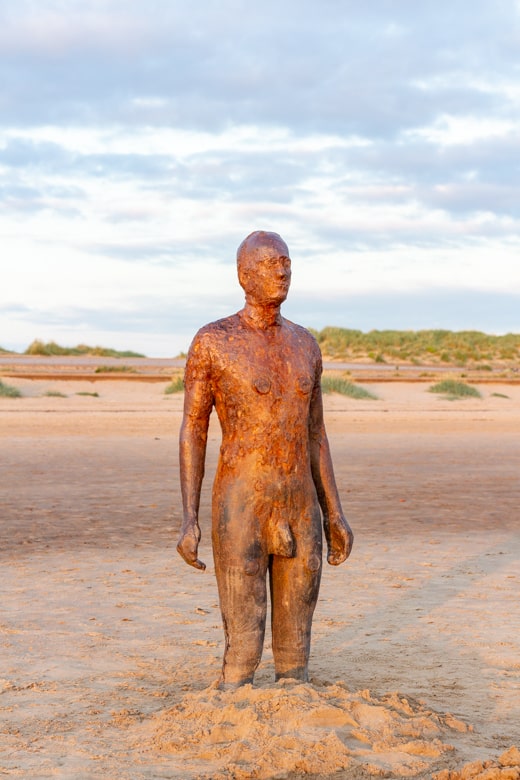
“Another Place” comprises 100 iron, life-size statues. Each one weighs an astounding 650 kilograms and is a cast of the artist, Antony Gormley, himself. The sculptures stretch for about three kilometres along the shore, and can be found up to one kilometre out to sea. Each of them faces the sea with the same expressionless face.
“The seaside is a good place to do this [explore man’s relationship with nature]… In this work, human life is tested against planetary time… It is no hero, no ideal, just the industrially reproduced body of a middle-aged man trying to remain standing and trying to breathe…”
Antony Gormley
Fun fact: Gormley has created other figure installations too — not just the Crosby Iron Men.
One example is Time Horizon, which features figures placed across the landscape at Houghton Hall in Norfolk.
And if you’re in East Kent, there are Gormley figures there too — I know of two in Folkestone and one in Margate.
If you’re going mainly for the sculptures
Check high tide times before you go. High tide usually happens twice a day, and you’ll want to avoid it if you plan to walk on the sand safely.
Every time I plan a trip to Crosby, I try to arrive around 1–2 hours after high tide. That gives the sea time to recede, and you can often find seashells too.
My favourite places to check tide times are the BBC website and the Tide Times app (iOS / Android).
Crosby Marine Park
Crosby Marine Park stretches from Waterloo to the estuary of the River Alt at Hightown. It’s the start of the 22-mile Sefton Coastal Path.
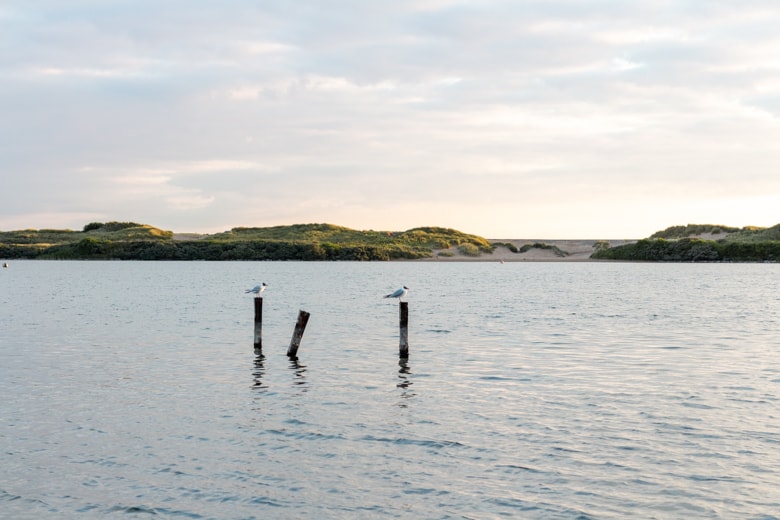
It consists of fields and protected natural wildlife near the Marine Lake. There’s a path through the park towards the sand dunes of Crosby Beach — it’s the most popular route if you’re walking to the beach, and it’s also the most convenient if you’re coming from Waterloo train station.
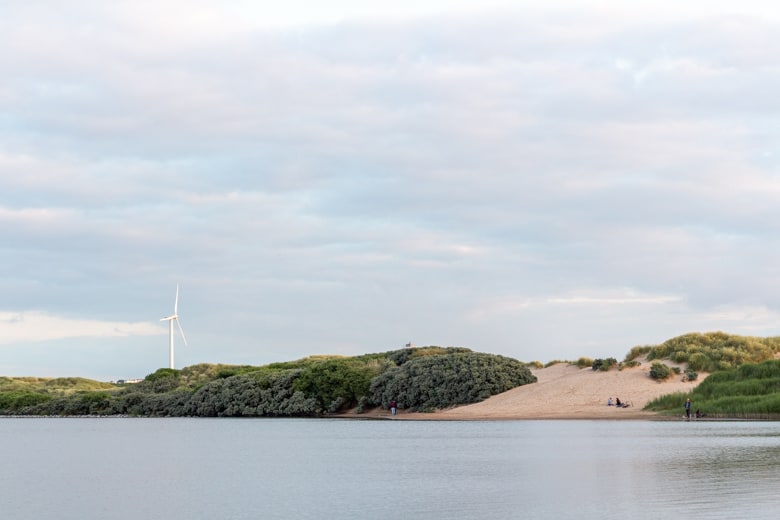
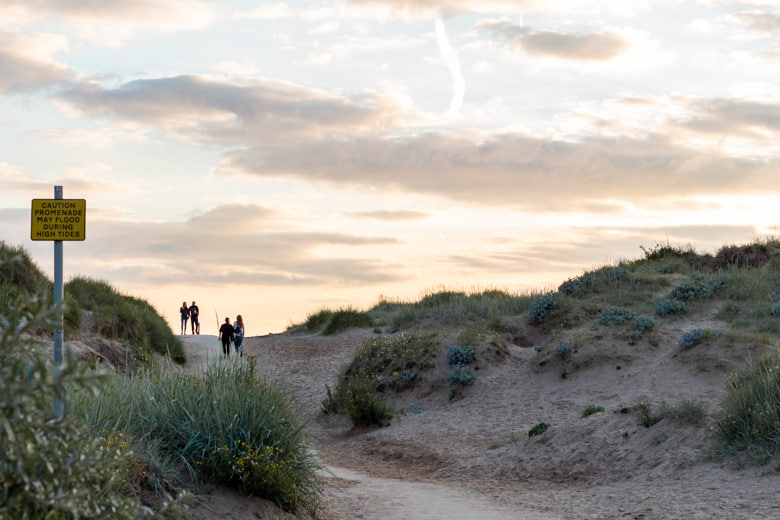
Crosby Marine Park also has a café on site, as well as the Crosby Lakeside Adventure Centre (a water sports and leisure centre). It’s a brilliant spot for lunch if you want to stay close to the sea.
Waterloo Mural

Once you’re near Crosby Marine Park, you might notice a gigantic mural painted on a cocoa bean storage shed at Seaforth Docks. It was painted in 2011 by local artist Kathryn Wilson and shows scenes of life in Waterloo and Crosby in the early 1900s.
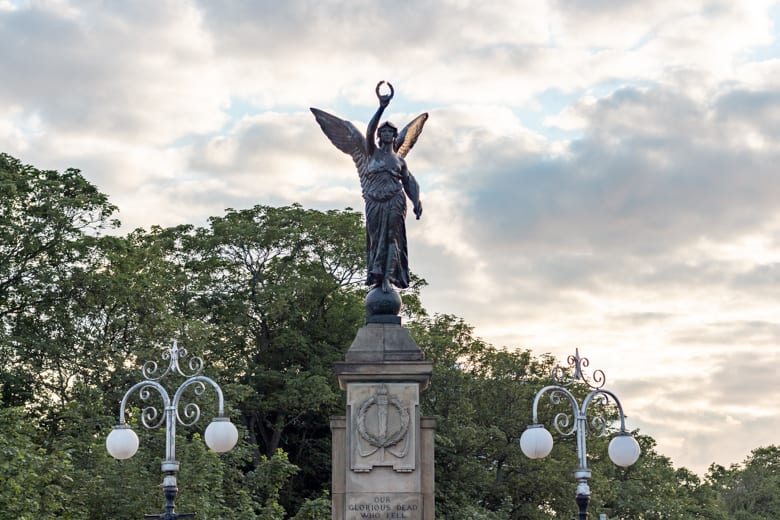
Starting from the left, you can see the electric tram — a popular way of getting around Liverpool back in the day. Next to it is Waterloo & Seaforth’s War Memorial, known as the Five Lamps. It’s located on the corner of Crosby Road North and Great George’s Road in Waterloo.
The huge bridge that runs through most of the mural is the Liverpool Overhead Railway, also known as the Dockers’ Umbrella (or Ovee). The railway opened in 1893 and operated along the Liverpool Docks, stretching from Dingle to Seaforth & Litherland.
According to Wikipedia, it was the first electric elevated railway, the first to use automatic signalling, electric colour light signals and electric multiple units, and it was home to one of the first passenger escalators at a railway station. It was also the second oldest electric metro in the world, preceded by the 1890 City and South London Railway.
Can you see the huge ship above the Liverpool Overhead Railway? It surprised me, but that’s the Titanic. I didn’t realise it had a connection to Waterloo — its captain, Edward John Smith, lived there in the early 1900s.
Next to the Titanic, you can see a bathing machine that could be found on many beaches back in the day. The women portrayed on the mural could have used it to change into their swimming costumes.
On the right is Crosby Mill, which currently serves as a family home (you can find it on Moor Lane in Crosby). And last but not least — the cormorant, which represents the mythical liver bird, the symbol of Liverpool.
The artist said the Waterloo mural is open at the side so the next time period can be added in the future.
I’ll admit, I’ve seen it a few times and it didn’t impress me much. After doing more research, I feel a bit bad that I didn’t take time to appreciate it properly.
How to get from Liverpool to Crosby Beach
Liverpool to Crosby Beach by train
You can get to Crosby by Merseyrail (train), by car, or by bus. The fastest and most convenient way is by train — the journey from Liverpool Central to Waterloo takes about 17 minutes.
You can also get off at Blundellsands and Crosby or Hall Road. The Crosby Iron Men are just around the corner from all of these stations.
Liverpool to Crosby Beach by car
If you travel from Liverpool to Crosby by car, expect a 30-minute journey. There are four car parks close to the beach. Mariners Road and Hall Road West are free, while Cambridge Road and Blucher Street usually require a small fee.
Liverpool to Crosby Beach by bus
You can also get from Liverpool to Crosby by bus in 30–40 minutes. It’s the slowest option (apart from walking).
Bus number 47 takes you to Waterloo, while bus number 53 goes as far as Mariners Road. Both start at Queen Square Bus Station in Liverpool.
Walk from Liverpool to Crosby Beach
Feeling brave? Love walking? You can go to Crosby on foot too. It’s a 5.3-mile (8.5 km) route that starts at the Museum of Liverpool and ends in the Waterloo area. It should take under two hours.
You could have a picnic at the beach and head back by train or bus — a lovely option for a simple day out, alone or with someone you love.
FAQ
Is Crosby Beach dangerous?
Yes, Crosby Beach can be dangerous, especially for children. The biggest risk comes from banks of mud, where you can get stuck easily and might not get out on your own. Add fast-moving tides (up to ten metres), and it can become a very serious situation.
Be mindful of this when visiting the beach and wandering around the statues.
Are dogs allowed on Crosby Beach?
Yes, dogs are allowed on the beach all year round. It’s advised to keep them on a lead, especially because of areas of sinking sand.
Can you swim in the sea at Crosby Beach?
No — according to Sefton Council, Crosby Beach is not a bathing beach and doesn’t have a patrolled bathing area.
Is Crosby Beach better than Formby Beach?
Yes and no — it depends what you want.
Both are sandy, open all year round, dog-friendly, and have car parks nearby.
Crosby Beach is home to “Another Place”, which makes it special even on a grey day. It’s also the nearest beach to Liverpool, so it’s usually busier.
Formby Beach is quieter, with more space, so it can feel less touristy. It’s close to the National Trust Formby area too — with sand dunes, pine woodland, and red squirrels.
Have you been to either of them? If yes, which one did you prefer? Let me know in the comments.


You May Also Like

10 Scenic Walks In St Ives, Cambridgeshire (Family-Friendly Routes)
Things to Do in Thanet: Margate, Broadstairs & Ramsgate (A Local-ish Guide)
